I’m not much of a sports fan, but there are other things I follow somewhat like sports. One is Redwood City’s development scorecard. On February 17, at its regularly scheduled meeting, the Planning Commission was presented with both the 2025 Housing Element Annual Progress Report and the 2025 General Plan Annual Progress report. There is a lot of interesting information in these (see the staff report from the meeting for a detailed summary), but I was particularly interested in how much progress has been made towards the city’s 2023-2031 Regional Housing Needs Allocation (RHNA) obligations.
The RHNA lists the State-mandated number of housing units the city needs to see built during the eight-year RHNA period (in this case, starting in 2023 and ending in 2031), and at which levels of affordability. Prior to the start of the eight-year period, each jurisdiction — in this case, Redwood City — is assigned quotas for the various affordability levels, and it is up to the city to not only ensure that there are enough opportunities by which developers could construct the needed number of housing units (those being for-rent apartments, for-sale condos and townhomes, single-family homes, and the like), but also to encourage such development. Then, by April 1 of each year, jurisdictions are required to submit a report of progress towards the various goals to the California Department of Housing and Community Development. That report needs to be “considered at a public meeting where members of the public are allowed to provide oral testimony and written comments.” Thus, the presentation to the Planning Commission (which will be followed at some point by a presentation to the City Council).
For this particular RHNA cycle, Redwood City was obligated to ensure the creation of 4,588 new housing units by 2031. That total is broken down by affordability, indicated as a percentage of the Area Median Income (AMI) — which in Redwood City’s case is the median income for all of San Mateo County — as follows:
- Extremely Low (30% AMI) or Very Low (50% AMI): 1,115 units
- Low (80% AMI): 643 units
- Moderate (120%): 789 units
- Above Moderate (i.e., market-rate): 2,041 units
The total annual household income figures that correspond to each level are based on household size and change over time due to inflation and such, so quoting a single dollar figure for each doesn’t make much sense. Instead, each year the county publishes a “San Mateo County Income Limits” chart that indicates just how much (but no more) a given household may earn to qualify for a given category, along with the maximum rent payment that household can be asked to pay for a qualifying rental, depending on the size of the unit in terms of bedrooms. That chart will be updated on April 1, so the chart currently in effect is the one that was issued in 2025. The current chart, as well as ones for years past, can be found here.
Getting back to the set of numbers I listed earlier, how has the city done so far?
- Extremely Low (30% AMI) or Very Low (50% AMI): 289
- Low (80% AMI): 303
- Moderate (120%): 76
- Above Moderate (i.e., market-rate): 653
The above numbers indicate the number of units in projects for which building permits have been issued. Thus, some of the projects have been completed, while others are still in the works. And they include all types of housing, from studio apartments in multi-family buildings to single-family homes to Accessory Dwelling Units (ADUs). But overall, the total so far is 1,321 units of new housing, compared with the assigned goal (again, by 2031) of 4,588 — which works out to 29% of the city’s total RHNA obligation for the 2023-2031 period.
In normal times, 29% at this point is, I believe, on the low side. But developers have been dragging their feet, hoping for improvements in our economy (primarily, lower interest rates, but also assurances that the demand for all of this new housing is truly there). A number of projects have been “entitled” — that is, approved by the city — but have not yet applied for building permits. As long as a good number of those entitled-but-without-permit projects go ahead and apply for, and receive, their building permits by 2031, the city should be fine. But between now and then, I’ll be keeping score…
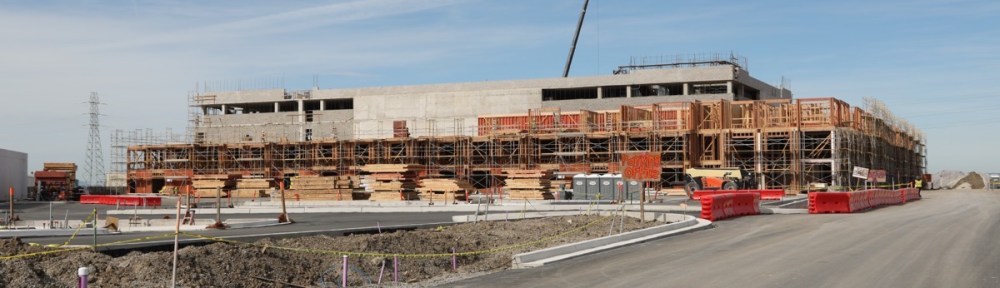
In 2025, two fairly large projects received permits and began construction. The first of these is 557 E. Bayshore Road (building A), the apartment building well underway on the former site of the Century Park 12 Theatres just east of Highway 101 and just south of the Whipple Avenue overpass. That particular building (which should ultimately be joined by another, slightly larger apartment building for which a building permit has yet to be applied) will add 222 for-rent apartments to Redwood City’s stock of housing, with 20 of the units being set aside for those at the Moderate income level, 10 for those at the Low income level, and 10 more for those at the Very Low income level. At the moment, framing on the building’s five stories of apartments is proceeding at a rapid pace, with the third story being nearly complete (framing-wise) on three sides of the central parking garage:
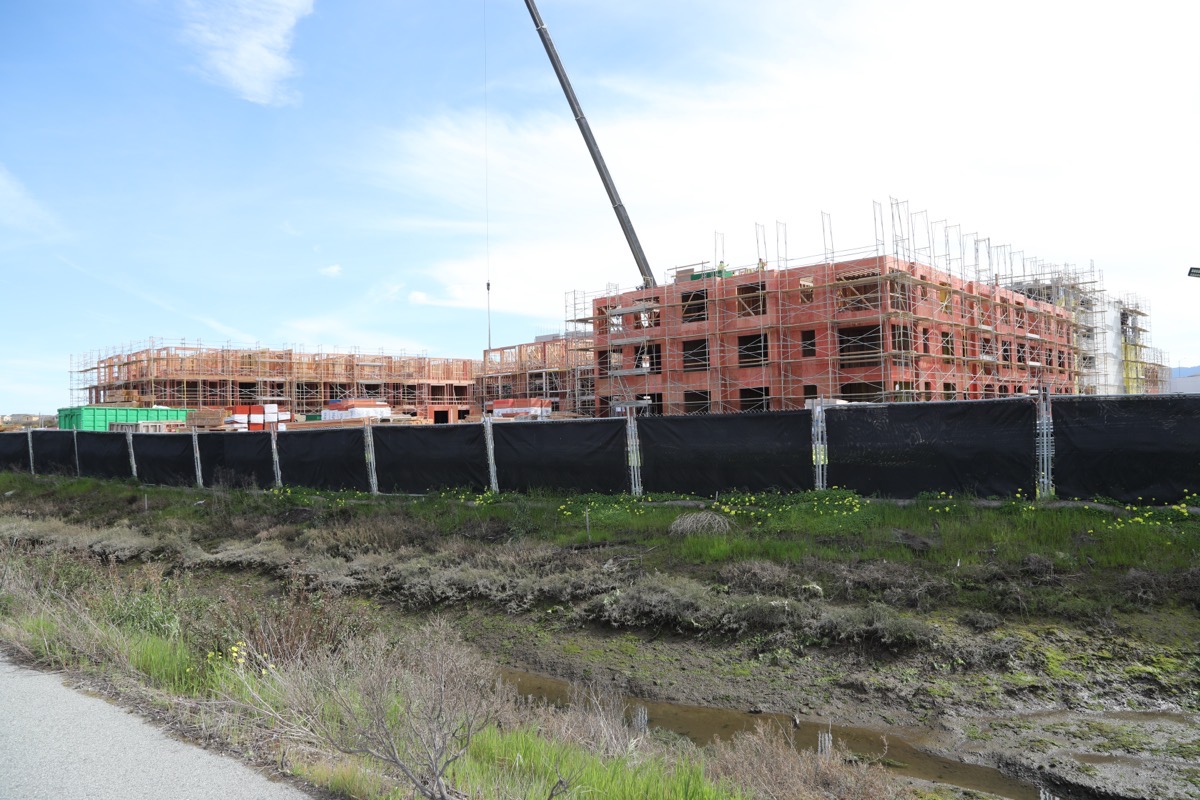
The above picture shows the project from out along the bay. Walking down E. Bayshore, it looks like this:
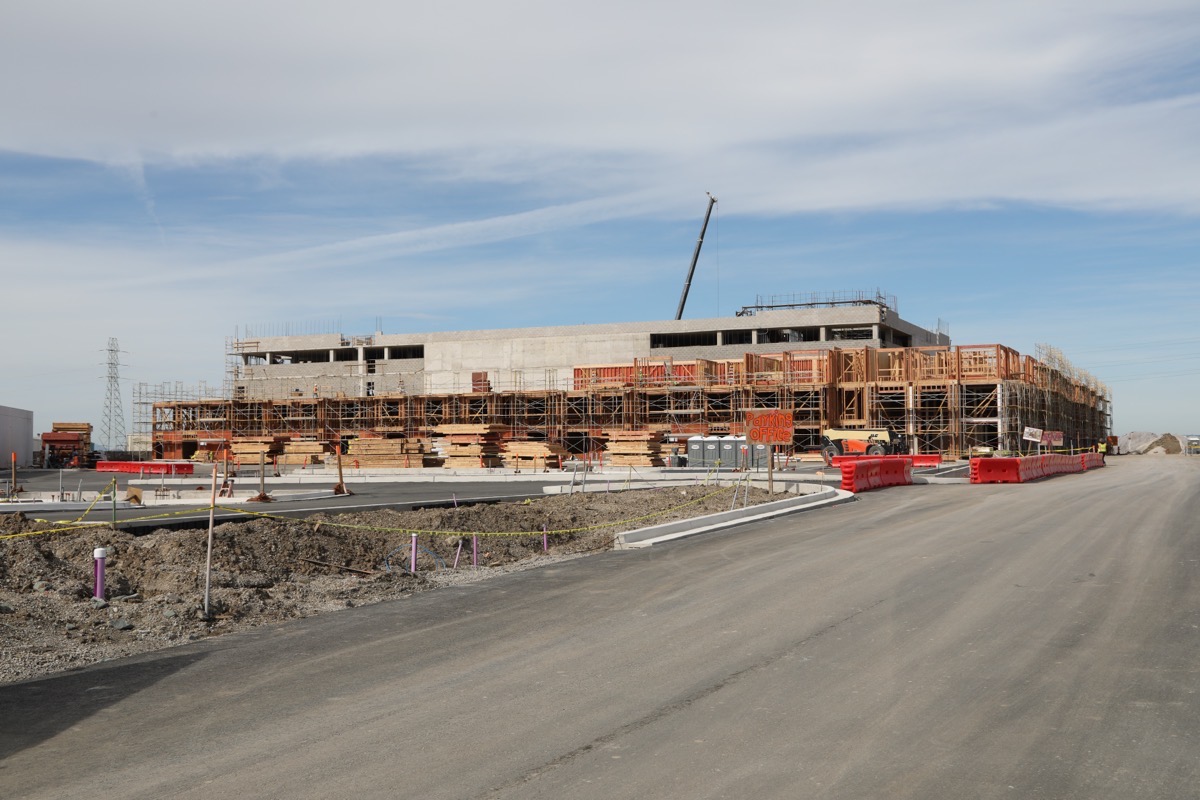
As you can see, there are just a few more apartment to be framed up on the freeway side of the building, and then the third floor will be complete. Then, it’s on to the next floor.
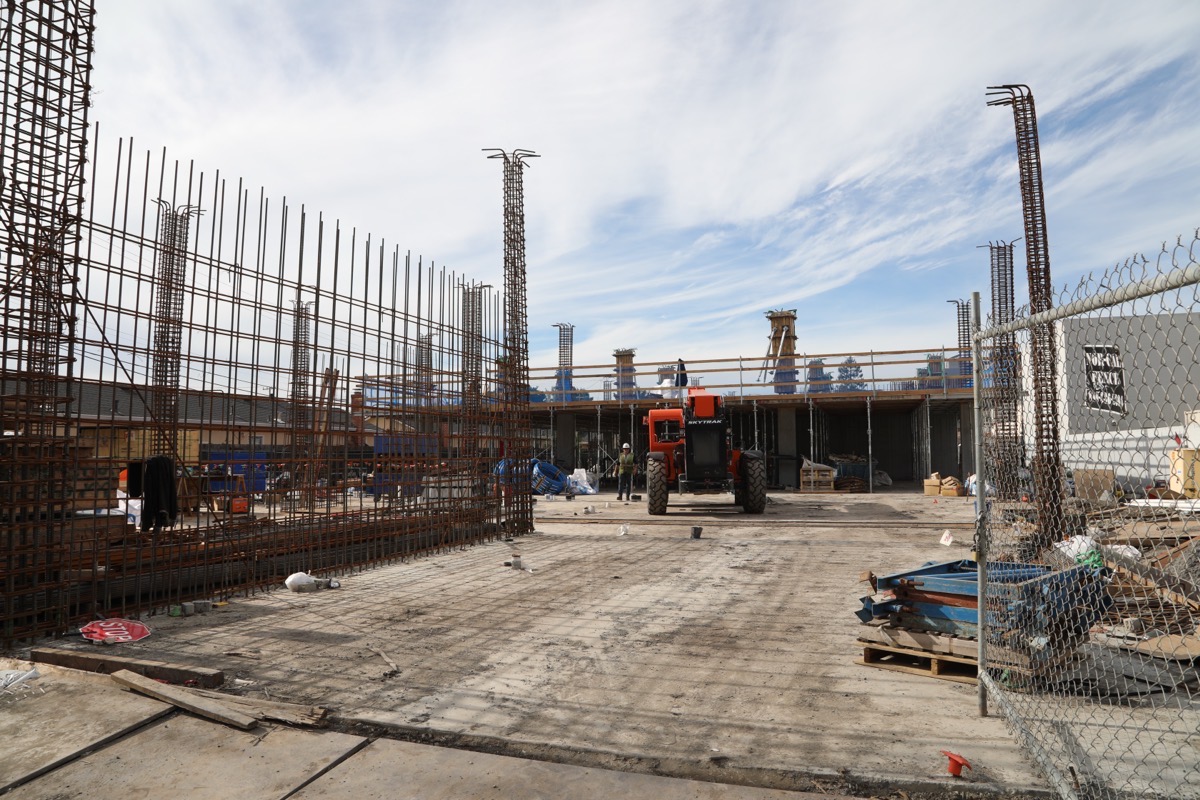
The other large project that received its permits and began construction in 2025 is the seven-story, 178 for-rent-apartment building underway at 112 Vera Ave. It is not nearly as far along, but then again it started much later in the year than the previous project did. Currently, concrete has been (or is about to be) poured for the first-level ceiling/second level floor and for the pillars that will support the levels above the second:
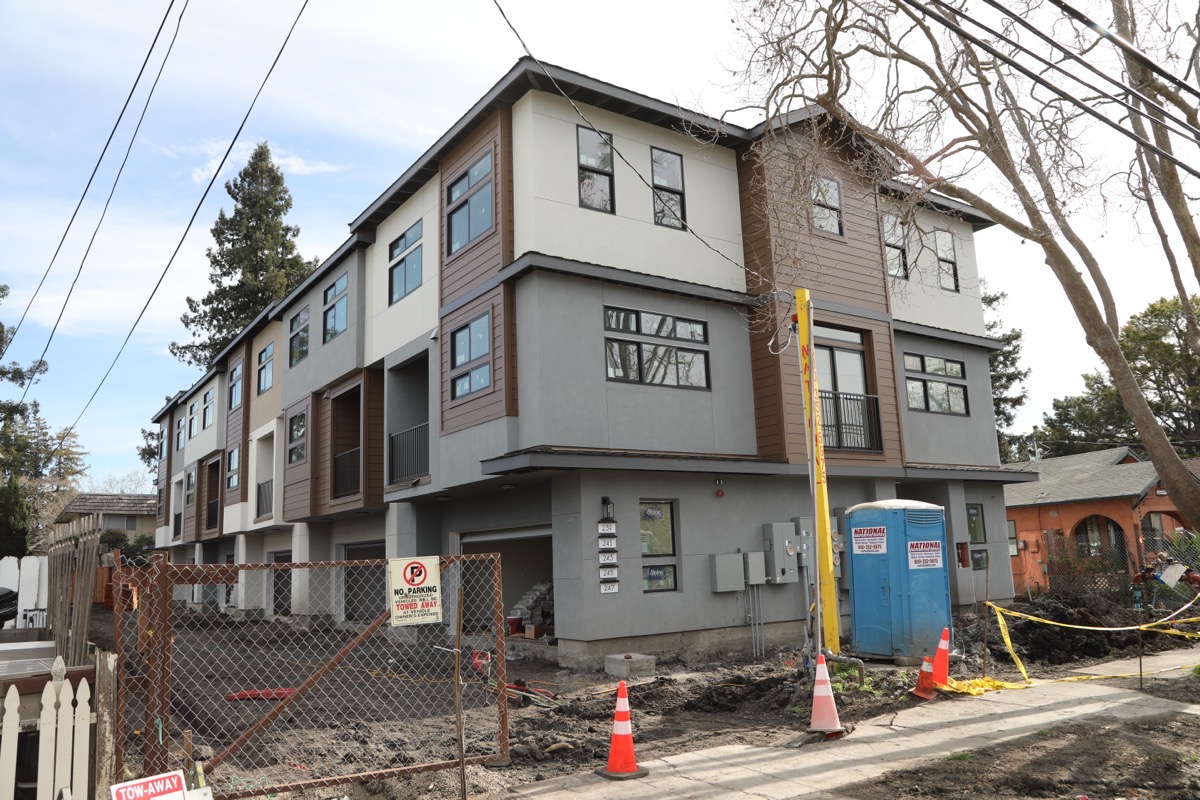
Of course, locals know that there is far more construction going on elsewhere in the city; other major housing projects began earlier than 2025, and have either wrapped up or are close to wrapping up. This includes the 518 for-rent apartments that will soon be made available for occupancy at Broadway Village (at Broadway and Chestnut Street, where the Broadway Plaza shopping center used to stand). It also includes some smaller projects such as the 7 for-sale townhouses at 31 Center St. (completed), the 8 for-sale townhouses at 955 Woodside Road (completed), and the 5 for-sale townhouses slowly nearing completion at 239 Vera Ave.:
One huge construction project that so far has not made a dent in the city’s RHNA obligation is ELCO Yards. So far, only the project’s four office buildings have been built (plus the small 39-unit Miramontes affordable apartment building at 1304 El Camino Real, but that building fell under the previous RHNA allocation). However, the city anticipates seeing permits pulled for the project’s two planned apartment buildings later this year. Together, those buildings will total 501 units, including a number of units at various affordability levels. Another 500 units of housing within easy walk of downtown Redwood City and the city’s transit center will be most welcome indeed, and will help the city score another big win in its quest towards adding just over 4,500 new housing units in the next five or six years.
 Walking Redwood City