
Towards the end of last year, I received a comment to one of my posts that contained the following questions:
Any idea how many “Affordable Apartments” there are in RWC? How many “Low Income Apartments” in RWC? Is there a difference? For a new article: how many backyard cottages and “Second dwelling units” have been started since say the year 2000?
These are good questions, and I’ve been looking into them.
First of all, “low income” is a particular category of “affordable.” When we talk about affordable housing, we are usually referring to housing that has been subsidized in some way and that is only offered to people who earn below a particular income limit (although strictly speaking affordable is anything you can actually afford given your total household income). Affordable housing can either be rented or purchased: you can rent an affordable apartment or you can purchase a home for which the price and/or mortgage has been set at an artificially low rate. Either of these help people whose income is lower than the median for a given area to actually live in that area.
As far as the government is concerned, within the broad category of “affordable” there are specific income categories that determine which housing one might qualify for. There are three common categories: “low,” “very low,” and “extremely low.” Low income is defined as 80% of the area median income (AMI), very low income is 50% of the AMI, and extremely low income is 30% of the AMI. San Mateo County publishes a document each year listing the AMI for various family sizes and giving specific values for each of the income categories. You’ll find the most recent (as of this writing, 2016) version of the document here [PDF link], but I’ll give a couple of examples for those who just want the highlights.
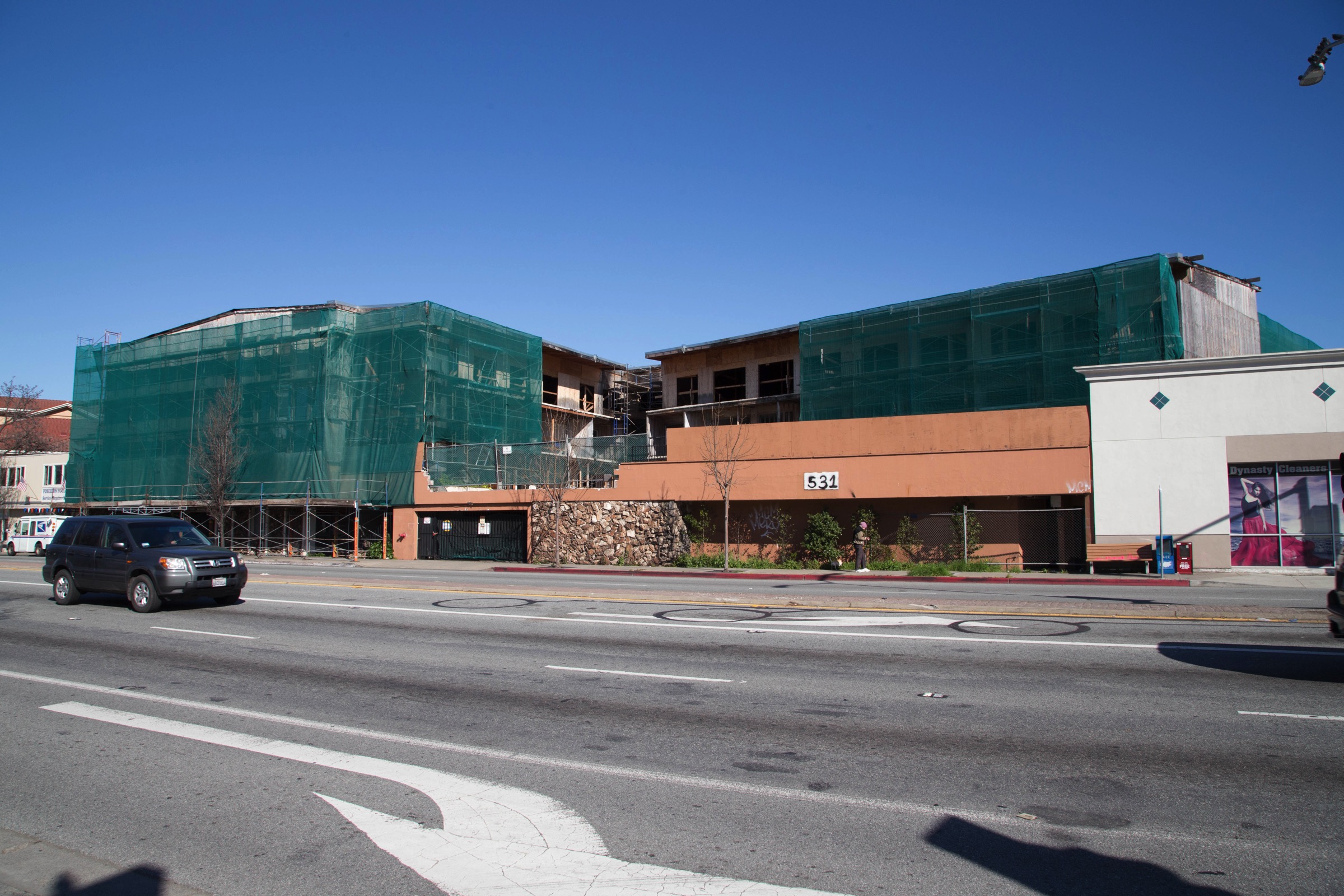
Hallmark House Apartments, soon to rebuild after a fire, contains some 72 low-income apartments.
In 2016, the median income for a family of four in San Mateo County, as determined by US Department of Housing and Urban Development (HUD), was $107,700. For an individual, the median income was $75,400. For the three affordable categories, the numbers are these:
- Low income: $68,950 for an individual, or $98,500 for a family of four.
- Very low income: $43,050 for an individual, or $61,500 for a family of four.
- Extremely low income: $25,850 for an individual, or $36,900 for a family of four.
Note that these are upper limits. Thus, if you are a single person and earn, say, $60,000 per year, you fall into the low income category and are eligible to rent or buy a home targeted towards low income earners.
Of course, the fact that one qualifies for affordable housing doesn’t mean that you are definitely going to be able to find a place in which you can afford to live. As we all know, San Mateo County is a highly desirable place to live and demand is very high. As well, the supply of affordable housing is nowhere near sufficient to meet demand. I’ve looked through a number of documents published by Redwood City and San Mateo County and have come up with a consolidated list that I believe to be somewhat accurate—but there are so many variables that it is hard to give a simple answer to something like “How many affordable apartments are there in Redwood City?”.
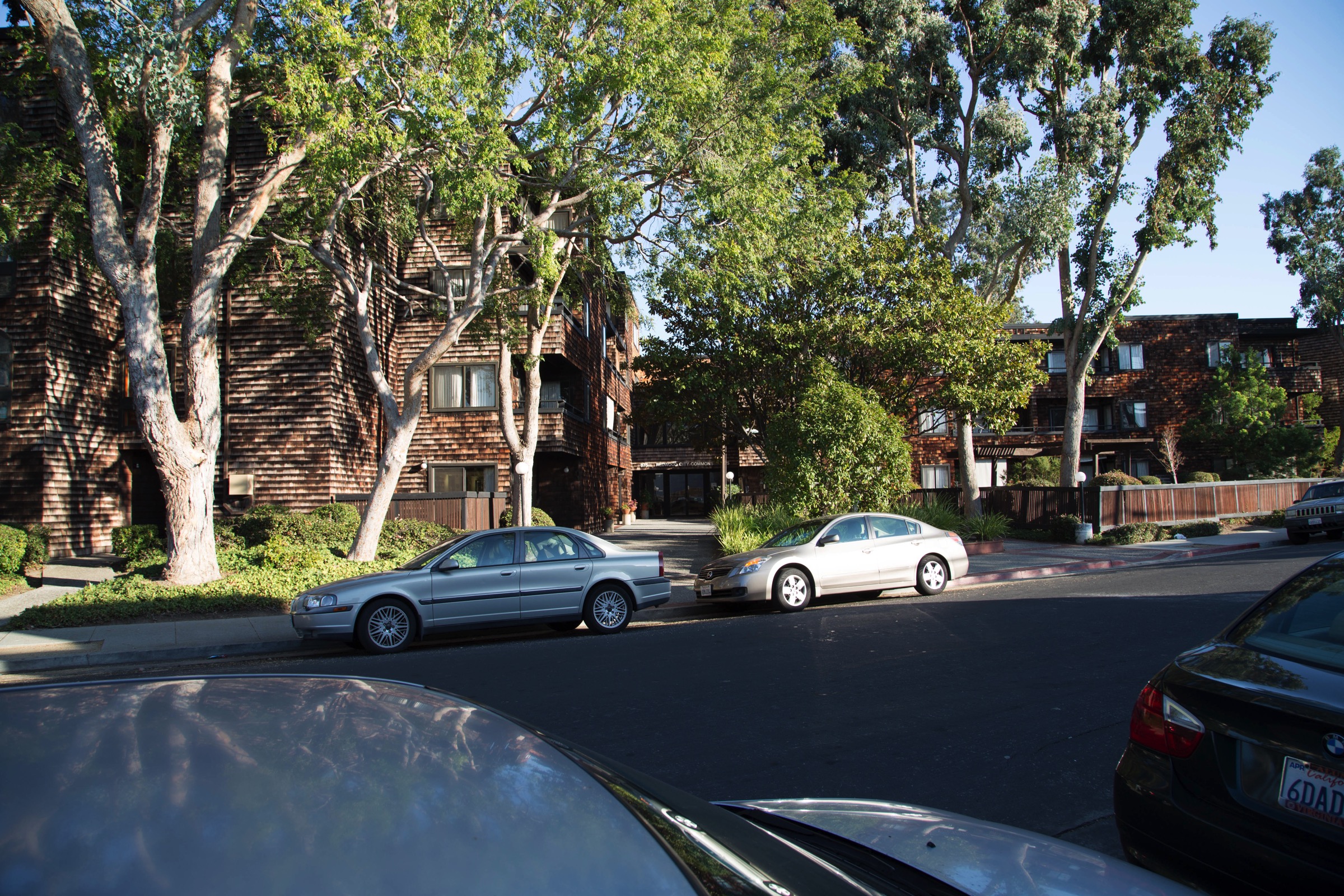
Redwood City Commons provides low-income housing for seniors and the disabled.
For one thing, the list only includes places that are restricted to those meeting strict governmental requirements (some developments are a mix of market-rate units and affordable units, while others are fully affordable). There likely are some rented rooms, “granny flats,” or even full apartments that lease for an amount that would make them affordable, but they aren’t subject to governmental controls and thus aren’t listed on the documents I’ve been perusing (such as these 55 apartments on Rolison Road, which don’t appear to be subsidized, yet). Next, many of the affordable apartments have additional requirements that may disqualify a prospective applicant. In particular, many are intended for seniors and thus have age limits, while others only accept those with particular disabilities. So a hypothetical able-bodied 30-year-old who fits into one of the defined income categories still will not qualify for many of the listed units. And finally, given a person’s income they can only select from units set aside for persons in that income category; if someone falls into the “low” income category they won’t qualify for units reserved for “very low” or “extremely low” income earners, further reducing the pool. (If you want to know more about the specific low-income housing opportunities within Redwood City, I detailed many of them in my three-part series How Low Can You Go?)
Having said all that, I can give you a ballpark grand total: 764 for-rent units and 66 for-sale units (think Habitat for Humanity). Those are the units that are in existence today, and all, I believe, are currently occupied. On a positive note, there are a number of units either being built or in the proposal stage that will (or would) increase this number by a significant percentage. Among the projects that are approved or under construction, we have the following:
- Hallmark House: 72 units, low income (soon to resume rebuilding after a fire)
- 801 Brewster: 50 units, very low income (approved, but not yet started)
- 849 Veterans: 7 units, very low income (under construction)
Then, there are the following projects which have been proposed but not yet approved:
- 707 Bradford: 117 units for very low income seniors
- Habitat for Humanity: 20 condos, low
- 353 Main: 7 very low, 9 low, 3 moderate
- Greystar IV/1409 El Camino Real: 35 units, low
- Broadway Plaza: 48 very low, 72 low
Thus we should have 129 additional affordable units soon, and, if all of the currently proposed projects with a low-income component were to be approved and built (you can decide the likelihood of that happening for yourself), we would add a further 311 to the mix. All told this would add up to some 1,270 affordable units (some for-sale), which, although still insufficient for the need, is starting to look a bit more respectable. So how do these numbers compare to Redwood City’s housing overall? That took a little digging, but in doing so I found a new source of information: the US Census Bureau’s website. According to them we have about 30,200 housing units in Redwood City. They appear to be fairly evenly split between rentals and owner-occupied units. Just under 60% of them are single-family homes, while the remainder are in apartment buildings, duplexes, and condos.
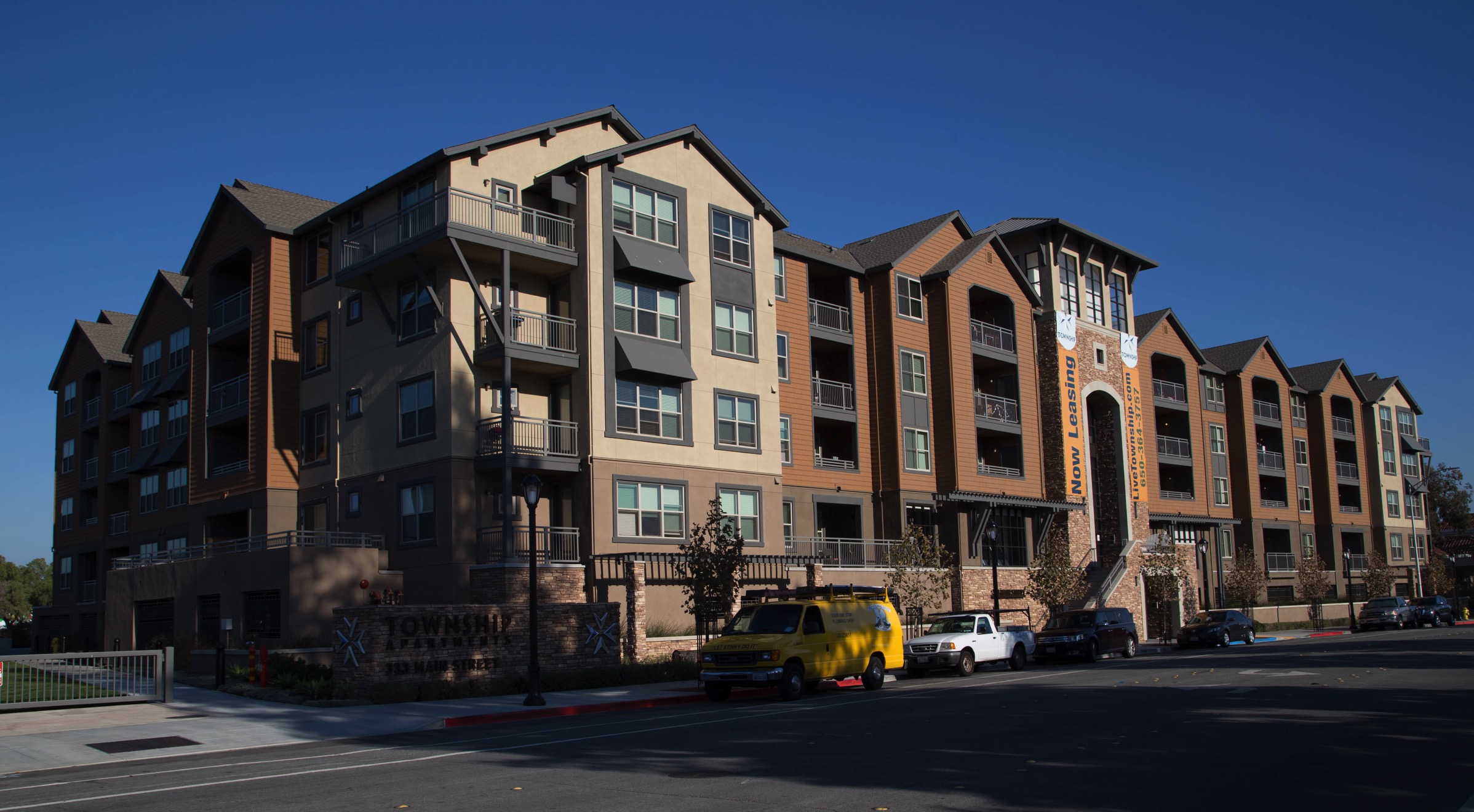
Township Apartments contains a mix of market-rate and low-income units.
Hopefully all the above addresses most of the “low income” questions. As for the question relating to “backyard cottages,” it just so happens that our Planning Commission addressed this very subject in their February 21 meeting, and gave some very clear answers. They listed exact numbers, but the short answer is that during the period from 2008-2015 the city received an average of two—yes, two—permit applications for Accessory Dwelling Units (ADUs—the formal name for “in-law units” or “granny flats”). In 2015 the city tweaked some of the rules regarding ADUs, making them a bit easier to create, and the result was dramatic: in 2017 the city issued 27 permits for ADUs.
So if the City Council successfully addressed the creation of ADUs in 2015, why, might you ask, did the Planning Commission discuss them just last month? Because our State Government came out with its own set of rules; rules that, as things currently stand, obsolete ours. With some adjustments, our rules will once again come into force, and making that happen is what the Planning Commission discussed. The adjustments, which after much discussion the Planning Commission eventually approved, make it even easier for a homeowner to construct a free-standing ADU or to convert an existing garage or utility building into an ADU. This should ensure that the number of ADU applications will continue to flood into Redwood City’s Planning Department for a while, at least.
The new rules eliminate the requirement for an extra parking space, and as long as there is enough driveway parking to make up for the loss, a garage can be turned into an ADU (tandem parking is allowed, so a driveway that is only one car wide won’t disqualify you). If you prefer to keep your detached garage, you can add a second-story ADU to it no matter the existing setbacks, as long as those setbacks are sufficient for fire safety. And speaking of fire, it appears that a detached ADU is not required to have fire sprinklers.
The Planning Commission increased the maximum size of an ADU, from 640 square feet to 700 (800 if the unit is handicap accessible, and 900 if your parcel exceeds 10,000 square feet and is in an RH or R1 zone). And there is no longer any restriction on the number of bedrooms.
Note that the preceding paragraphs give a simplified view of what the Planning Commission voted on; for all of the details, check with the Redwood City Planning Department.
With the Planning Commission acceptance, the new rules now go before the City Council. Currently the Council is scheduled to discuss them on March 22, meaning that the new rules could go into effect around May of this year. So if you’ve been thinking about constructing an ADU, things just got even easier. And given that a secondary dwelling could provide additional income and presumably would increase your property value, even if you haven’t been thinking about an ADU perhaps you should. ADUs are a great way to increase our stock of affordable housing, since they often lease for an amount below the cost of a typical apartment.
That’s where we stand regarding affordable housing and Accessory Dwelling Units here in Redwood City. However you feel about the numbers, hopefully this provides a good starting point for conversations around them.
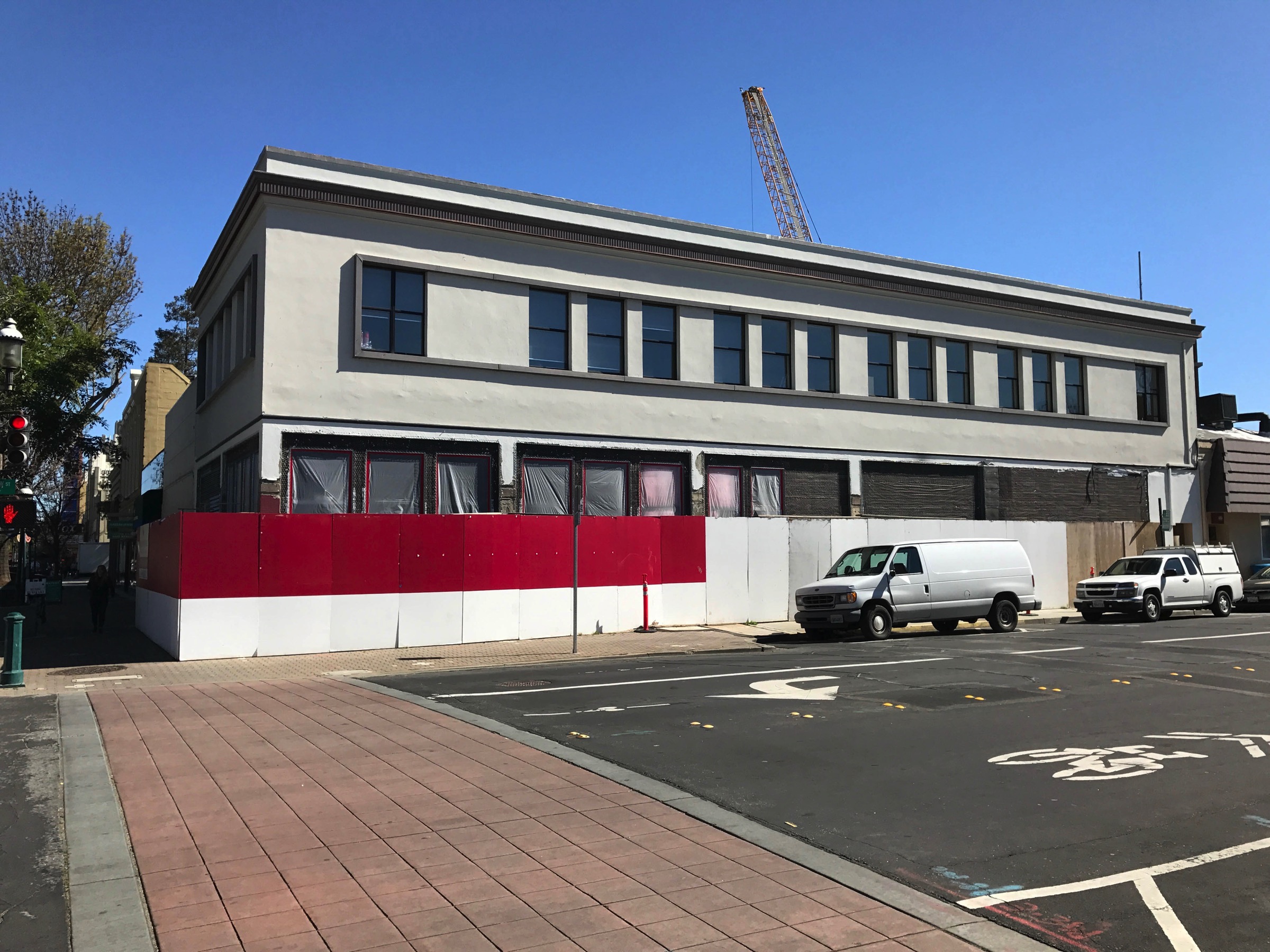
Just a quick update: Broadway Masala (pictured above) is making great progress, as you can probably see. And they recently filed a permit application for a new sign, so it looks as if we’ll be eating at this highly regarded restaurant again very soon. And I’ll at long last be able to stop reporting on its progress…
Redwood City has once again put out the call for new members for its various boards, commissions and committees. In particular they are looking for new members for:
- Complete Streets Advisory Committee (two seats)
- Library Board (two seats)
- Planning Commission (three seats)
- Historic Resources Advisory Committee (two seats)
- Senior Affairs Commission (one seat)
Many of you who read this blog have strong opinions, and the best way to get those opinions heard and acted upon is to join one of the city’s many boards, commissions, and committees. To apply go here: http://ask.redwoodcity.org/TakeSurvey.aspx?SurveyID=9833n76.
 Walking Redwood City